-
DISCOVER MORE
- Recordings
- Magazine
- Podcast




TOKYO
14-15 NOVEMBER 2026
9:00-10:00
10:00-10:20
Main Stage
Leecy Li & Fergus Inns (Co-Hosts)

Leecy Li & Fergus Inns (Co-Hosts)
10:20-10:40
Main Stage
Rebekah Cheng (Fabric)
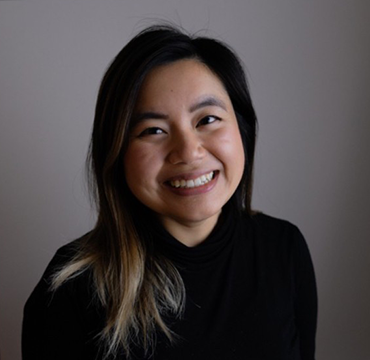
Rebekah Cheng (Fabric)
10:40-11:00
Main Stage
Yudi Sun (Duolingo)
Yudi explores the push and pull between data and intuition: how evidence can act as a map, how intuition and vision can take us beyond the edges of that map, and why great design depends on both.
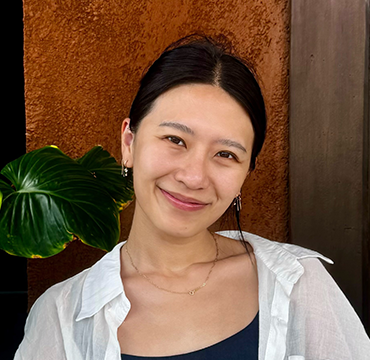
Yudi Sun (Duolingo)
11:00-11:20
Main Stage
Mira Krogh & Trine Erga (Blank | Lyse Tele)
Erga and Krogh show how participatory processes can be used to create solutions that are relevant, understandable and valuable to youth together with those concerned. You will get a greater understanding of inclusive design processes, and concrete frameworks and methods to use in your own practices. The insights, frameworks, tools and processes are applicable to vulnerable and hard to reach user groups.
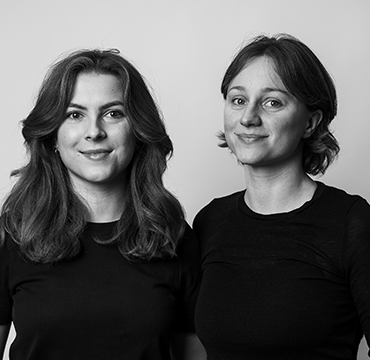
Mira Krogh & Trine Erga (Blank | Lyse Tele)
11:20-11:40
Main Stage
11:40-12:00
12:00-12:20
Andreas Refsgaard (Independent)
In this talk, Andreas will take the audience on a playful and thought-provoking journey through a near-future in which creative tools do more than obey. They suggest, improvise, perform, and sometimes seem to develop intentions of their own. Drawing on his work at the intersection of art, interaction, and emerging technology, he will explore how this changes the role of the designers and artist - from maker of finished forms to choreographer of shifting behaviours, relationships, and possibilities.
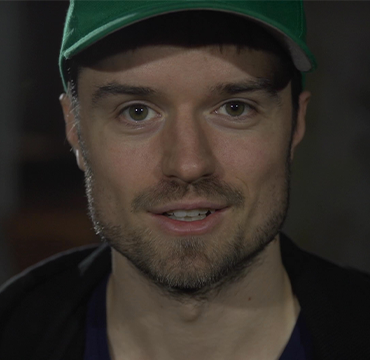
Andreas Refsgaard (Independent)
12:20-12:40
Mutia (Tia) Ferhana (Sacks of Spice)
An interactive exhibition exploring how virtual reality can be used as a medium for human storytelling. However, this exhibition is not just to show stories, but to immerse audiences in perspectives that challenge their own, using sensory design and point of view shifts to create deeper empathy.

Mutia (Tia) Ferhana (Sacks of Spice)
12:40-1:00
Gabriel Patrocinio (Winning)
This talk presents a critical analysis through case studies, examining prompts and AI-generated images to reveal recurring patterns of inclusion and exclusion. Drawing on Human-Centered Design and Tech Ethics Frameworks, the session explores the ethical, social, and design implications of generative AI, highlighting the responsibility of designers and the role of Eurocentric and North American big tech companies in shaping more equitable, representative, and socially responsible AI systems. Designing for users requires not only addressing functional needs, but also engaging with the social, cultural, and symbolic contexts in which users exist.
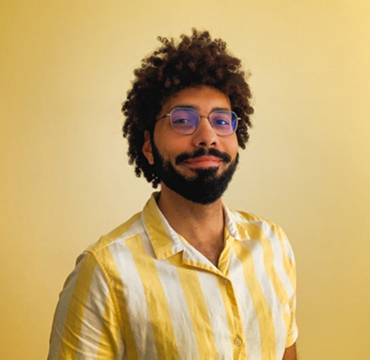
Gabriel Patrocinio (Winning)
Workshop Room
11:40-1:00
Miikka J. Lehtonen & Tomohiro Loeer (UTokyo College of Design Planning and Coordination Office)
In this workshop, participants will explore what it means to leave the field, or to consider the responsibility of designing endings. Through concrete scenarios of researchers and designers exiting fieldwork, they explore the implications for you as a designer, for the project, and for the people involved. Drawing on experiences from both design practice and academic research, the workshop introduces a relational perspective on endings, where care, accountability, and co-creation extend beyond the formal duration of a project.

Miikka J. Lehtonen & Tomohiro Loeer (UTokyo College of Design Planning and Coordination Office)
1:00-2:20
Main Stage
2:20-2:40
Rimjhim Agarwal (Valtech)
The session invites participants to reflect on why systems so often hesitate and wait for urgency and disruption before they are willing to act. Through frameworks and real-world examples, we look at how early frictions evolve into systemic strain, when design interventions can become critical and how tools like speculative design, foresight and game-based interventions can help shift mindsets, inspire action and shape more adaptive futures.
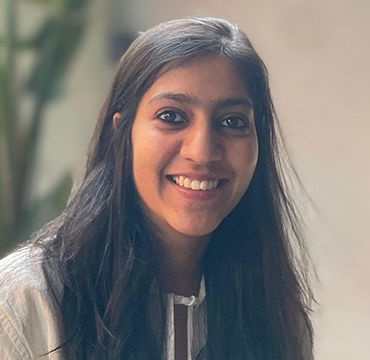
Rimjhim Agarwal (Valtech)
2:40-3:00
Henney Hyehyun Ahn (Gwangju University)
This talk offers a ground-level view of what happens when you rebuild design education for the AI era — not as theory, but as a living experiment running right now in a classroom in Gwangju, South Korea.
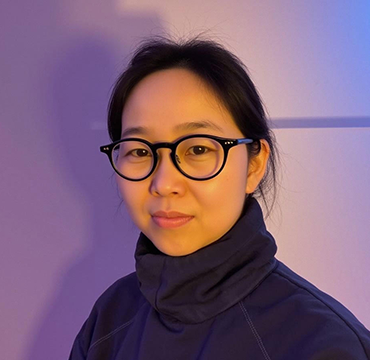
Henney Hyehyun Ahn (Gwangju University)
3:00-3:20
Batsirai Madzonga & Shazmin Majid (Fycely)
For decades, the metrics that reveal what users actually feel — EEG for cognitive workload, FACS for facial emotion, GSR for physiological arousal — have lived behind academic paper walls, out of reach for the designers and researchers shaping everyday products. That's no longer sustainable. As AI reshapes how quickly and pervasively products are built, self-reported feedback alone can't keep pace — we need objective, moment-by-moment signals of user experience now more than ever. This is the problem we set out to solve when we started building Fycely: how do you take tools that used to require a PhD and a lab, and put them in the hands of the people actually shipping product? We'll walk through what these signals actually measure and why they matter more in an AI-driven landscape — grounding each one in real examples from building Fycely's facial expression analysis engine, including what broke, what surprised us, and what we learned trying to make FACS-grade emotion detection work outside a controlled lab setting. From there, we'll get practical: how teams can start using these signals without a PhD on staff, drawing on the design decisions behind Fycely itself — where we drew the line between scientific rigor and usability, and how we scaled facial expression analysis into something a design team could run themselves, no research background required.

Batsirai Madzonga & Shazmin Majid (Fycely)
3:20-3:50
Veronika Hniličková (Ciklum)
Drawing on years of WCAG practice, this talk reframes accessibility as the foundation of a new discipline: Agent Experience (AX). You'll leave seeing your craft in a new light, ready for a shift that's already underway.

Veronika Hniličková (Ciklum)
Workshop Room
2:20-3:50
Eriko Suzuki & Reiko Suzuki (WellC)
This interactive workshop brings designers and creatives into a shared practice of regenerative thinking: imagining futures where wellbeing is collective, circular, and co-created. And then, re-grounding it into "what we can do today" to start co-creating that future.

Eriko Suzuki & Reiko Suzuki (WellC)
3:50-4:10
4:10-4:30
Main Stage
Courtney Marchese (Independent)
This talk moves from lived experience to system-level insight, using personal field research and applied design work to explore how meaning is lost as data scales, and what designers can do to preserve it. The structure intentionally mirrors the journey of data itself: from human story to abstraction to decision-making.

Courtney Marchese (Independent)
4:30-4:50
Main Stage
John Bai (SpaceXAI)
Observation, execution, and critique in an age of rapid prototyping. The talk argues that the designer’s role is becoming less defined by a specific artifact and more by a repeatable loop of observation, execution, and critique. As it gets easier to make ideas tangible, the value shifts toward creating evidence, navigating possibilities, and deciding what is worth carrying forward.
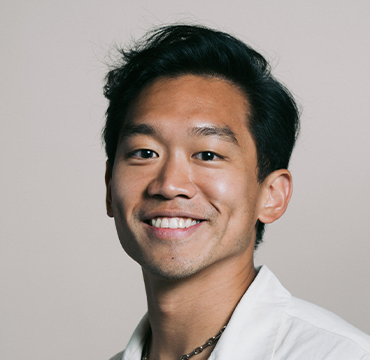
John Bai (SpaceXAI)
4:50-5:10
Main Stage
5:10-5:20
Main Stage
Leecy Li & Fergus Inns (Co-Hosts)
Leecy Li & Fergus Inns (Co-Hosts)
5:20
8:00